
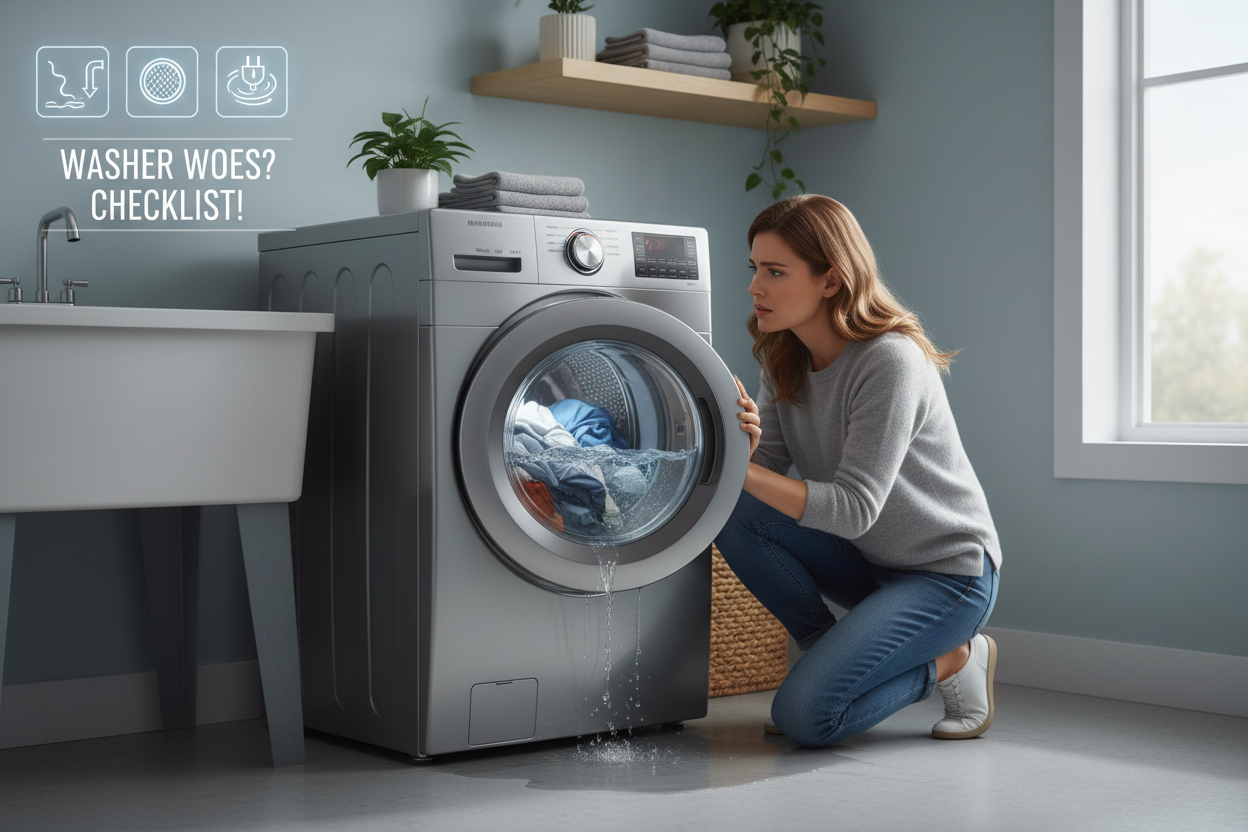
Washing Machine Not Draining or Spinning? 8 Safe Checks Before You Book a Repair
A washing machine that stops mid-cycle, leaves clothes soaking wet or refuses to drain can quickly disrupt a busy household. The good news is that some apparent faults have relatively simple causes, such as an unbalanced load, a kinked hose or a blocked user-accessible filter.
Other problems need professional attention. This guide explains the safe checks you can make before booking a repair, the warning signs you should not ignore, and what Irish consumers should know about repairs and faulty goods.
Important: Always follow the instructions for your exact washing machine model. Turn the appliance off and unplug it before checking a hose, filter or other user-accessible component. Never remove an appliance panel or attempt internal electrical or mechanical repairs yourself.
1. Check the display and find the user manual
Start by noting any error code, warning light or symbol on the control panel. The same code can mean different things across manufacturers and models, so avoid relying on a generic online explanation.
Find the model number, which is commonly printed around the door opening, behind the door or on the back of the appliance. Search the manufacturer’s support site or consult the supplied manual for model-specific instructions.
Modern washing machines may pause because they have detected a drainage problem, unbalanced load, door issue or interruption to the water supply. The code helps narrow down the cause without dismantling anything.
2. If the machine will not start, check the door and controls
A washing machine normally will not begin a cycle unless the door is fully closed. Check that no clothing is trapped between the door and seal, then close it firmly without forcing it.
- Confirm that the programme has been selected and the Start button has been pressed correctly.
- Check whether a child lock, control lock or delayed-start function is active.
- Make sure the machine is plugged directly into a suitable wall socket and has power.
- If the door will not open, wait for the safety lock to release and follow the manual. Never force it.
If the appliance repeatedly trips the electrics, smells of burning or shows signs of an electrical fault, stop using it and arrange professional help.
3. If no water enters, inspect the visible water supply
When a machine starts but does not fill, check that the water supply valve is open and that the inlet hose has not been kinked, crushed or trapped behind the appliance.
Beko’s Irish support guidance recommends checking that the water is turned on and the hose is not twisted or compressed. If those checks do not solve the problem, the machine may need an engineer.
Do not disconnect plumbing unless the manual permits it and you are confident you can do so safely. Moving a heavy washing machine can also damage flooring, hoses or connections.
4. If the machine will not drain, check the hose and filter
A drainage problem is one of the most common reasons a washing machine will not complete its cycle or move into the final spin. Samsung and Bosch both advise checking for a kinked drain hose and a blocked user-accessible pump filter.
First, look at the visible section of the drain hose. It should not be sharply bent, flattened or trapped. Its position and installation height must also match the appliance manual.
If your model has a user-accessible pump filter, follow the manual carefully:
- Switch the machine off and unplug it.
- Allow hot wash water to cool before opening the filter area.
- Place towels and a shallow container underneath because a significant amount of water may escape.
- Use the emergency drain hose if your model provides one.
- Open the filter slowly and remove visible lint, coins, buttons or other debris.
- Refit the filter securely before testing the machine and check for leaks.
Not every model uses the same filter arrangement. Stop if the filter is inaccessible, stuck or different from the instructions in your manual.
5. If the machine will not spin, rebalance the load
A spin problem does not always mean that the motor has failed. Updated Samsung guidance notes that modern machines can reduce or stop spinning when their sensors detect an unbalanced load.
A single heavy item, such as a bathrobe, towel or pair of jeans, can gather on one side of the drum. Pause the cycle, wait for the door to unlock and redistribute the load. Adding one or two similar items may help balance a very small load.
Also check whether the machine has drained properly. If water remains in the drum, the appliance may prevent a high-speed spin until the drainage issue is resolved.
6. If the machine vibrates or moves, check the load and installation
Some movement during a fast spin is normal, but repeated banging, excessive vibration or a machine travelling across the floor needs attention.
- Check that the drum has not been overloaded.
- Redistribute heavy items that have gathered on one side.
- Make sure all four feet are firmly supported and the appliance is level.
- On a newly installed machine, confirm that the transit bolts were removed as directed.
- Check for coins, keys or other loose objects in the drum.
Grinding, scraping, high-pitched squealing or continuing heavy knocks can indicate a component problem. Stop the cycle and arrange an inspection rather than repeatedly testing the machine.
7. Treat every water leak seriously
A washing machine should not leak. Turn it off, close the water supply if this can be done safely, and inspect only the visible connections.
Look for a loose connection, visibly damaged hose, trapped door seal or excessive detergent foam. Do not continue using the appliance if water is pooling underneath it, the cause cannot be identified, or water is close to an electrical socket or connection.
A hidden leak may come from an internal hose, pump, seal or other component. These faults require a qualified appliance engineer or plumber, depending on the source.
8. If the machine or clothes smell, clean the accessible areas
Moisture, detergent residue and debris can accumulate in the drum, detergent drawer, door seal and filter. Beko recommends cleaning these areas as directed, using the correct detergent quantity and allowing air to circulate after a wash.
Wipe the folds of the door seal with a clean damp cloth, remove residue from the detergent drawer and run the manufacturer-recommended maintenance programme. Do not mix cleaning products or use homemade treatments that are not approved in the manual.
A persistent sewage-like or burning smell is different from a routine musty odour. Stop using the appliance and seek professional advice if cleaning the accessible areas does not resolve it.
When should you call an engineer?
Arrange professional help when the basic checks do not solve the problem or when the appliance shows a potentially serious fault. Stop using the machine if:
- It trips the electrics, produces smoke or smells of burning.
- Water is leaking underneath the cabinet or near electrical connections.
- The drum makes grinding, scraping or repeated heavy knocking sounds.
- The door, seal, cable, plug or hose is visibly damaged.
- The same error code returns after the manual’s recommended checks.
- The machine still will not drain, spin or fill.
Know your repair rights in Ireland
If a washing machine was faulty when supplied and the problem was not caused by accidental damage, misuse or normal wear and tear, the retailer may be responsible for providing a remedy under Irish consumer law. The appropriate remedy depends on when the fault appeared, its seriousness and whether repair or replacement is possible.
The Competition and Consumer Protection Commission explains that statutory consumer rights apply separately from a manufacturer guarantee or optional warranty.
Since 31 July 2026, Ireland’s repair rules also cover washing machines and washer-dryers in circumstances such as wear and tear, accidental damage or certain cases outside a faulty-goods claim. The CCPC provides more detail in its spare parts and repairs guidance.
Repair or replace?
A straightforward blockage, hose problem or replaceable component may make repair the sensible choice. Replacement becomes more relevant when the appliance has repeated major faults, significant internal damage or a repair cost that is difficult to justify against its age and condition.
If replacement is the practical option, compare capacity, energy consumption per 100 cycles, spin performance, noise, programmes and installation requirements. Choose a drum size that suits your normal laundry load instead of automatically buying the largest model.
Explore washing machines at Euronics.ie, browse the wider laundry appliance range, or review the available installation options. Installation availability can depend on your location and how you place the order.
Frequently asked questions
Why are my clothes still wet after the spin cycle?
The load may be unbalanced, the selected programme may use a lower spin speed, or the machine may not be draining properly. Check for water in the drum, redistribute the load and consult the manual.
Can I open the filter while water is still in the machine?
Only follow the draining procedure specified for your model. Switch off and unplug the appliance, allow hot water to cool, and prepare for water to escape. Never force the filter cover.
Why does my washing machine stop with time remaining?
The appliance may be balancing the load, heating water, controlling excess foam or responding to a filling or drainage problem. Note any error code and check the manufacturer’s model-specific guidance.
Should I repair an older washing machine?
Consider the appliance’s age, condition, repair history, likely repair cost and suitability for your household. A professional diagnosis can help you compare a repair with the cost and expected benefits of replacement.
